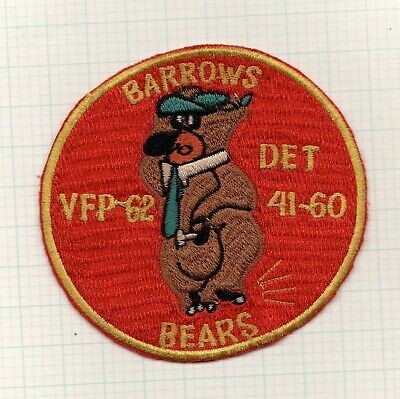
The Bay of Pigs took place in April of 1961 and the details, as I remember them, are like this:
We were told around the beginning of April that they wanted to use the [USS] Independence to put on an air show for President Kennedy and since most of us from the detachment were still in the Squadron, they were going to use Det 41-60 for that. We left Norfolk on the Independence heading south and we thought we were going to pick up the President in Jacksonville. It kept getting warmer and warmer as we went south and Jax just isn’t that warm in early April. So we didn’t know what was going on except that we were a lot further south than Jax.
Also we weren’t doing any flight operations—supposedly so all the aircraft needed for the air show would be up and available for the show. We were even all issued new flight deck jerseys so we’d look good for the President. Then they told us that the air show had been cancelled but we didn’t head back north. I remember a note in the daily bulletin with the Plan of the Day that we shouldn’t speculate on where we were in our letters home—sort of a strange note. We had a fair amount of other ships along with us as we headed south; it wasn’t just us and our plane guard destroyers.
I can’t remember the specific dates but one day around 1600 we had a detachment meeting and LCDR Barrow, our OIC, told us that we were going to paint our aircraft; we didn’t understand why since they looked pretty good (we had painted all of them on our Med cruise). Then we found out how we were going to paint them; we needed to paint out all the English language markings and we were going to have help painting them. They mostly needed the detachment personnel to mask off anything like static ports and such that shouldn’t be painted. As I recall one of the aircraft got painted that night on the flight deck in a very short time with help from some other squadrons and even some of the ship’s company. The other two were painted the next day.
Since the numbers had been painted out we painted Roman numerals in the wheel wells I, II, III. And when they needed to be moved the announcements over the flight deck loud speakers referred to them as Gray Ghost one, two, or three. The air group started flight ops again, but the detachment wasn’t doing any flying. Another very interesting thing: about half the aircraft parked on the flight deck were armed with conventional weapons (no nukes) and they were just parked and not flying.
We got the word that all three of our aircraft were going on a mission and all three took off. As I recall our pilots even took their name tags off their flight suits and one of our pilots had extra ammunition for his survival pistol; he looked like Pancho Villa with two belts of ammo crisscrossed across his chest.
When the aircraft returned the camera magazines were unloaded as quick as possible (they were taking them out while the aircraft were taxiing forward to park—and we were the first 3 aircraft to land. I was helping the plane captain for one of the aircraft and got a look at the pilots map on his kneeboard as he handed his equipment down from the cockpit and it looked like a map of Cuba with a red line heading east and west on it. I’m guessing, but I’m pretty sure the 3 aircraft did a photo recon of a good part of Cuba.
It was shortly after that that we heard about the Bay of Pigs invasion. And it was after that that we collided with an ammunition ship (can’t remember its name) while refueling at night. Not long after that we headed back to Norfolk. [Update 4/21/2012: The ship in question was the USS Diamondhead. She came in at our aft portside lifeboat sponson as we separated from a tanker, I think it was the Neosho, after a night refueling operation. ---Ron Liston]
That’s what I remember. You can search the internet and find quite a lot about the Bay of Pigs invasion, but almost nothing about the US Navy being close by. I’ve always thought we were there to provide support to the invading forces but then, for whatever reason, they decided not to.
I knew (don’t remember how I found out) that some VFP-62 personnel had been awarded the Armed Forces Expeditionary Medal for “Clandestine operations in the Caribbean,” but have no idea if Det 41-60 was involved or what dates were involved.
Frank W. Schrader
Webmaster's Note: The USS Independence (CVA 62) was awarded the Navy Expeditionary Service Medal for the period 19 Apr 1961 thru 29 Apr 1961.
Guest's Comments
(3/25/14):Hi, just stumbled across your website. I was aboard the Independence as a ABH3 from 10/31/60 until I separated from the Navy on 8/31/1962. On May 1, 1990 I was awarded the Navy Expeditionary Medal (Cuba). I was separated two months before the Cuban missile crisis.
"We arrived back at our home port of Norfolk, Va. on March 3, 1961 and docked at pier 12. Families, children and girlfriends were waiting on the pier. As we docked as many as 2,500 sailors started their leave. We stayed put and never left the pier until April 3, 1961. We had some carrier ops and returned to pier 12 on April 11, 1961. The entire ship was preparing for the 50th anniversary of Naval Aviation celebration that was to take place aboard the Independence. This included a cruise to Jacksonville, Fl., where President Kennedy was to come aboard. I was really excited about liberty in Jacksonville because it was where my grand parents lived and I had not seen them in a few years.
As we put out to sea on the 17th of April you can always tell when you clear the harbor and on into deep water as the ship picks up speed and you can feel the strong movement through the water. But this time was different; we continued to pick up speed well beyond our normal cruising speed. The whole ship started to shiver and shake and groan and we were looking at our shipmates wondering what was going on. Then Captain H.P. Lanham, our Commanding Officer, came on the intercom or "bitch box" as we called it then and to my best recollection said: "Gentlemen our port of call at Jacksonville has been cancelled and we will be steaming into the Caribbean. The top speed of this vessel is classified but I can tell you that our current speed is 40 plus knots."
Can you believe it? A big ship like that, 1,070 feet long 270 feet wide at its widest and the flight deck is 110 feet from the water line going over 46 miles per hour! Now I was disappointed that I wouldn't get to see my grandparents but the fact we were going to the Caribbean was exciting. Norfolk in mid-April still is quite chilly and the thought of some really warm temperatures was inviting. As we cruised throughout the night the air became very warm, moist and humid. I could tell we were there."
I do recall one thing that was not mentioned, we were in fact blockading the Island of Cuba and we were there for about 30 days. Right behind us was big battle wagon, the Newport News, I think CA-134. I was on the sponson deck outside of hangar bay ops center when the "News" fired a volley from her 8" guns. When I looked in the direction the guns were pointing, I saw a freighter with smoke coming out of her stack. Shortly there after, the smoke stopped and the freighter turned and went back over the horizon. I can just imagine the radio conversation that was going on.
I've read quite a bit about the Bay of Pigs and how the US needed to deny any involvement in the invasion but never any mention of US Naval support for a blockade. By the way me and my crew moved those "Gray Ghosts" around quite a bit during that time. Also I was led to believe the cameras on those crusaders could photograph the dimples in a golf ball at 10,000 feet!
Paul Koons
7/5/12: Hi, My name is George Lewis a ships company member aboard Indy at that time, an ICFN on mess duty in the Chiefs mess(first time I heard the collision alarm) when we hit or the Diamondhead or they hit us. Anyway when I wrote the Navy for my medals they included Navy Expeditionary (some one had wrote "Cuba" next to it) and I always believed it was for the missile crisis, yours makes more sense.
George Lewis ex IC2 USN
7/5/12:Hello, My name is James R. Howe and I served on board the U.S.S. Independence from 1960 to 1963 as an IC electrician. My duty station was on the bridge and my work station was ship announcing systems including all alarms. When the collision alarm sounded we were all in are bunks and if I remember it was around 0100 hours. My berthing compartment was below decks in E-division and it was chaos as we all rolled out to that alarm, I was perhaps the only one in the compartment that recognised the alarm as I had seen the wave form several times when I checked it on the oscilloscope. I hollered out to all my sleepy shipmates that it was a collision alarm and to man their "special sea and anchor details."
As I traveled up the ladders and came out onto the flight deck it was utterly black but had an eerie glow. As I looked around I saw flames off our aft portside. As I turned to continue my journey upwards to the bridge my eye caught the horizon off the bow. I slowly looked up and discovered the source off the eerie glow. It was all the stars above and for first time in my life I beheld the "Milky Way" galaxy. I was completely awed by the sight but continued around to ascend the island to the bridge. I could no longer see the fire off the port.
Arriving on the bridge "Boats" called me aside and said, " 'IC' how come when I sounded the alarm I could NOT override with voice to tell the ships crew that this was NOT A DRILL and we had collided with another ship?" He continued to explain that he always sounds the alarm for battle stations and then overrides with his announcement of " THIS IS A DRILL THIS IS A DRILL, GENERAL QUARTERS, ALL HANDS MAN THEIR BATTLE STATIONS."
I explained to "Boats" that the collision alarm was designed to have absolute priority and nothing could override "COLLISION".
Maybe we should have practiced with a collision drill like we did Battle Stations.
Anyway it was your account of the "Gray Ghost" that triggered these memories and I thank you for them.
Jim
James R. Howe
IC2, U.S.S. Independence CVA-62
1960-1963
Jim Brumm reports that according to the NAVY DEPARTMENT AWARDS WEB SERVICE (NDAWS) - UNIT AWARDS web page: VFP-62 Det 60 earned the Navy Expeditionary Service Medal for service from Feb 1, 1962, through April 30, 1962. Frank says, "the entry for Det 60 is in error and the dates should be in 1961 and not 1962." We are seeking clarification. If anyone has pictures of the "Gray Ghosts" or any supporting information, please email the VFP-62 Webmaster
Frank reminds us that his recollections are as accurate as possible after four decades, when we were all so young.
Thank you for visiting our site.
Please Recommend Us To Your Friends
Email the Webmaster
We invite you to click this link - VFP-62 Webmaster to email a question, comment, correction, or contribution to this page.