
Header image  
WE CRUSADERS  
line decor
  
line decor


THE STORY Of THE PHOTO-CRUSADER: INFORMATION, OUR HOBBIES, BOOKS, PILOT STORIES, MUSEUM RESTORATIONS, & ART

Email the -VFP-62 Webmaster to send a comment or contribution to this page.

Updated July 11, 2010

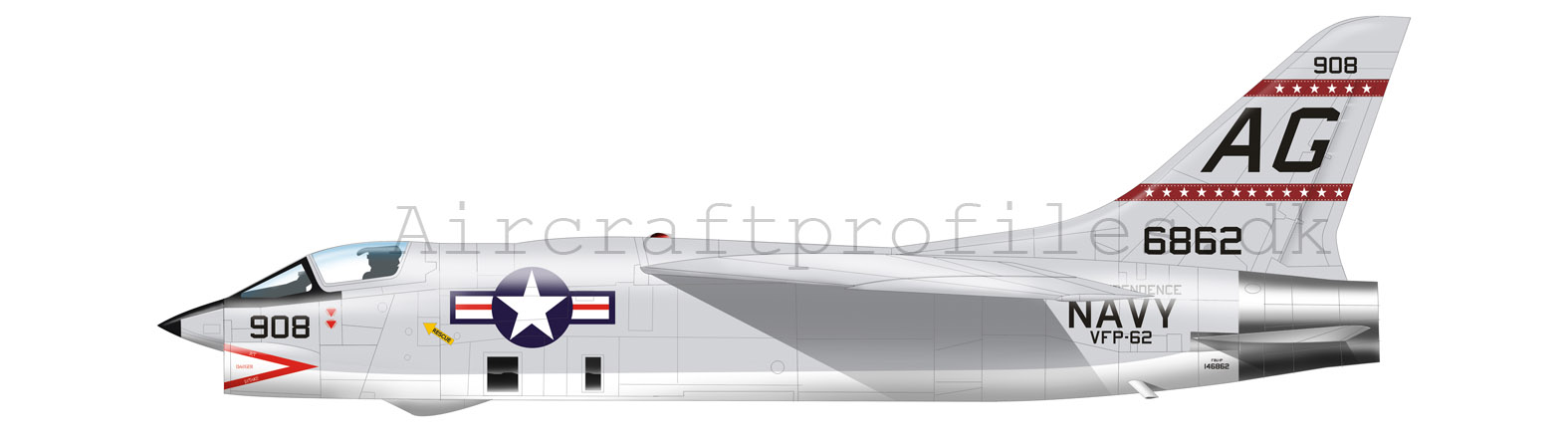
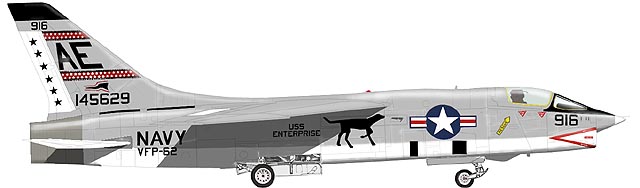
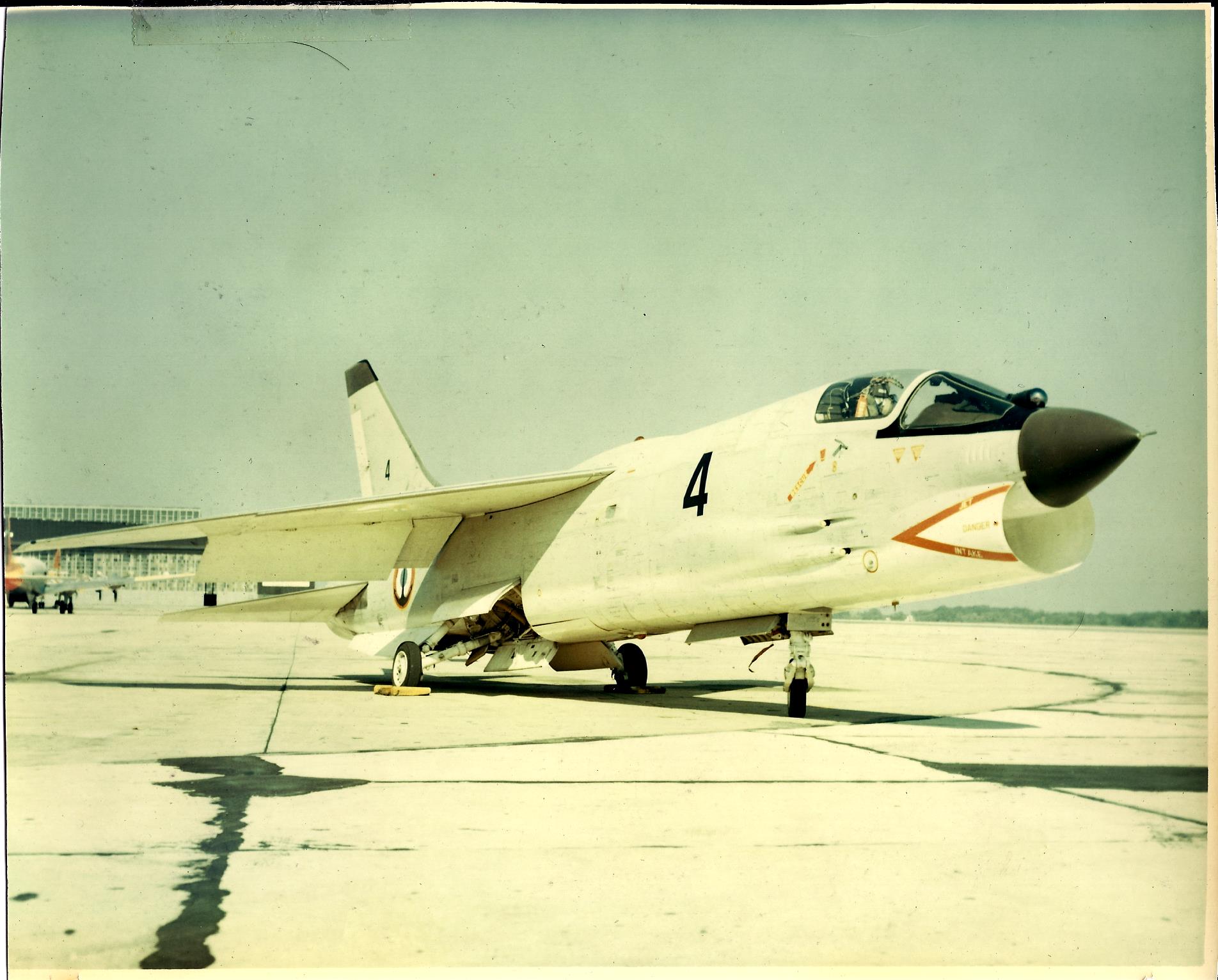
RF8-A (F8U-1P)..click here to enlarge picture

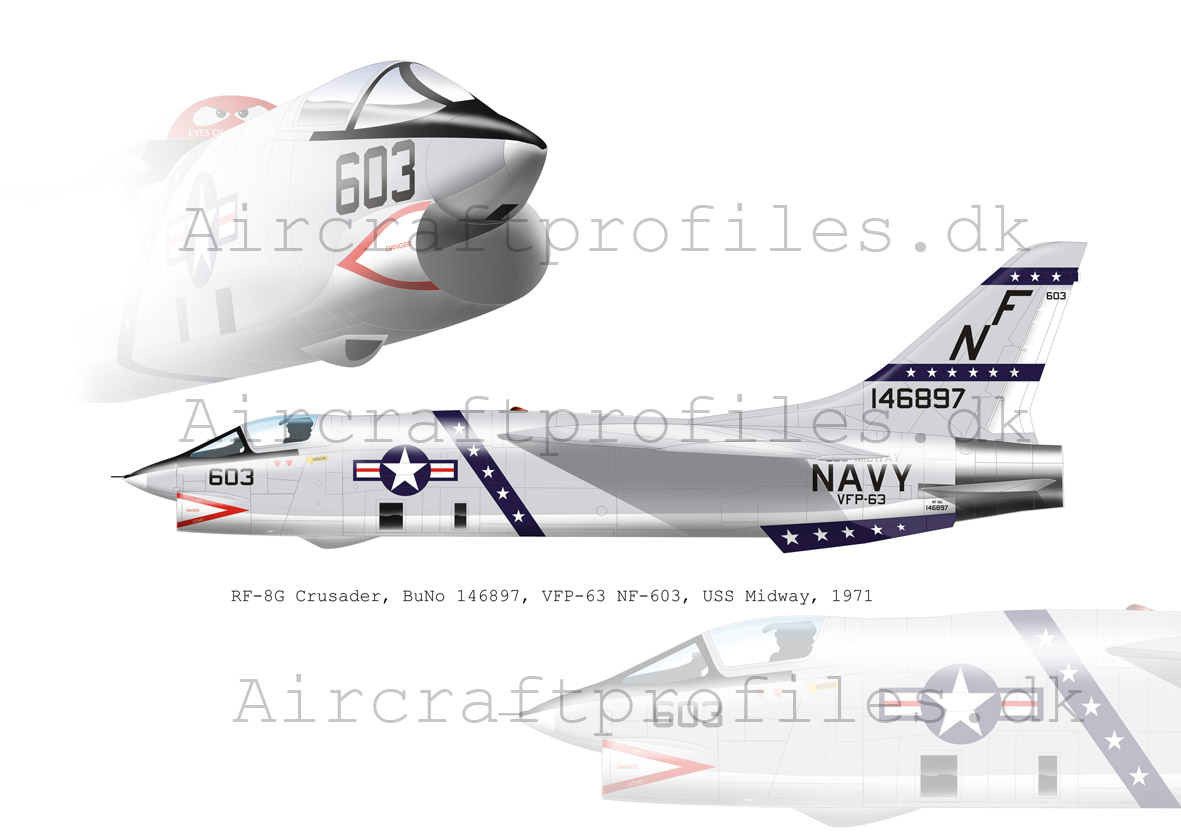
Click here to enlarge Mad's RF-8G from VFP-63

Art Courtesy Mads Bangsø

About the artist: Mads is a university student in Denmark and offers his art for sale. He will custom make his rendition to your specifications. Click here for his site.www.aircraftprofiles.dk

"You can take the boy out of the Crusader
But you can't take the Crusader out of the boy." --anonymous

"I flew Vigi's and A-4's as well, all fun. But I don't think there's a pilot alive
who flew F-8's who won't say that was the most fun to fly.
I considered it the "Harley Davidson" of airplanes."
John "Lightnin" Davison VFP-63

"I'd make a deal with the Devil if I could just go back and fly either one
[RF-4C & RF-8G] again for just a little while!"
Jim "Mugs" Morgan Col USAF Ret.

    RF-8 Crusader Photo Gallery

  • Internal Link to: RF-8 Photo Gallery -Photos submitted by our guests.

    • RF8 Photo Crusader with a sidewinder missile attached!!

    • "Two Sader" - The Two seat Crusader

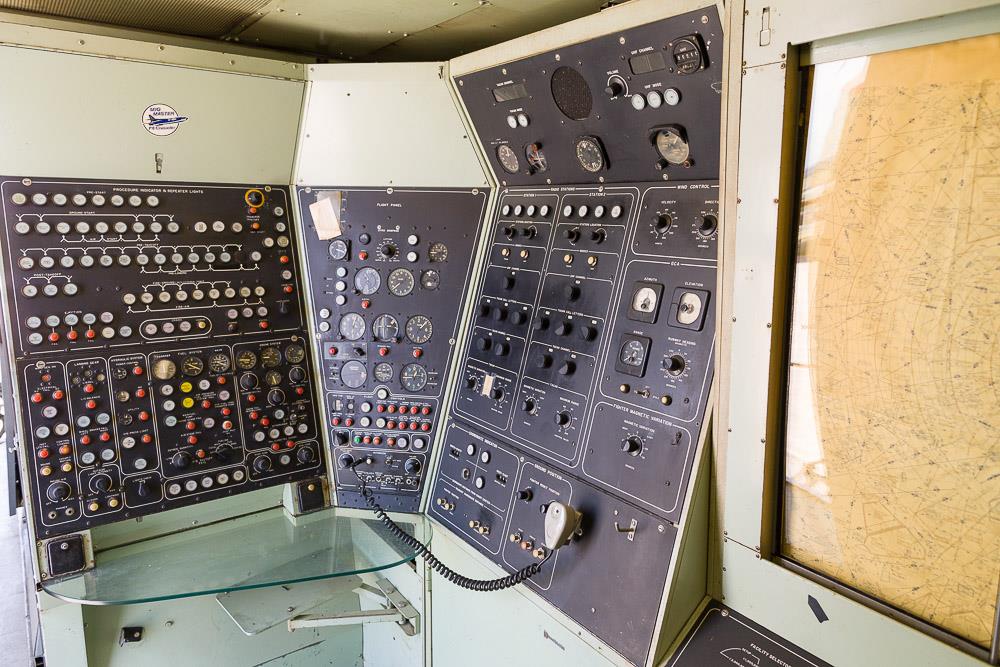
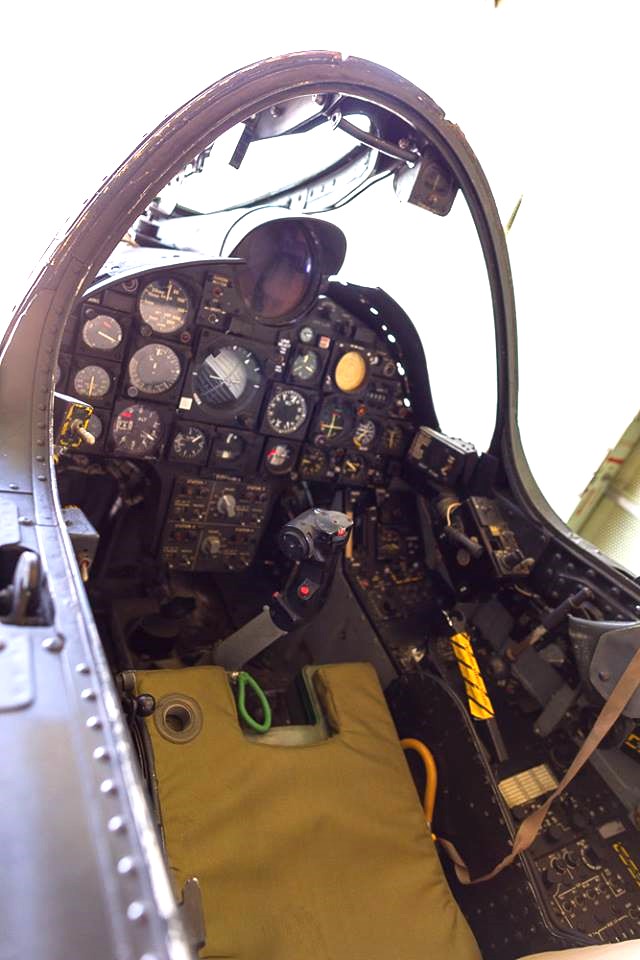
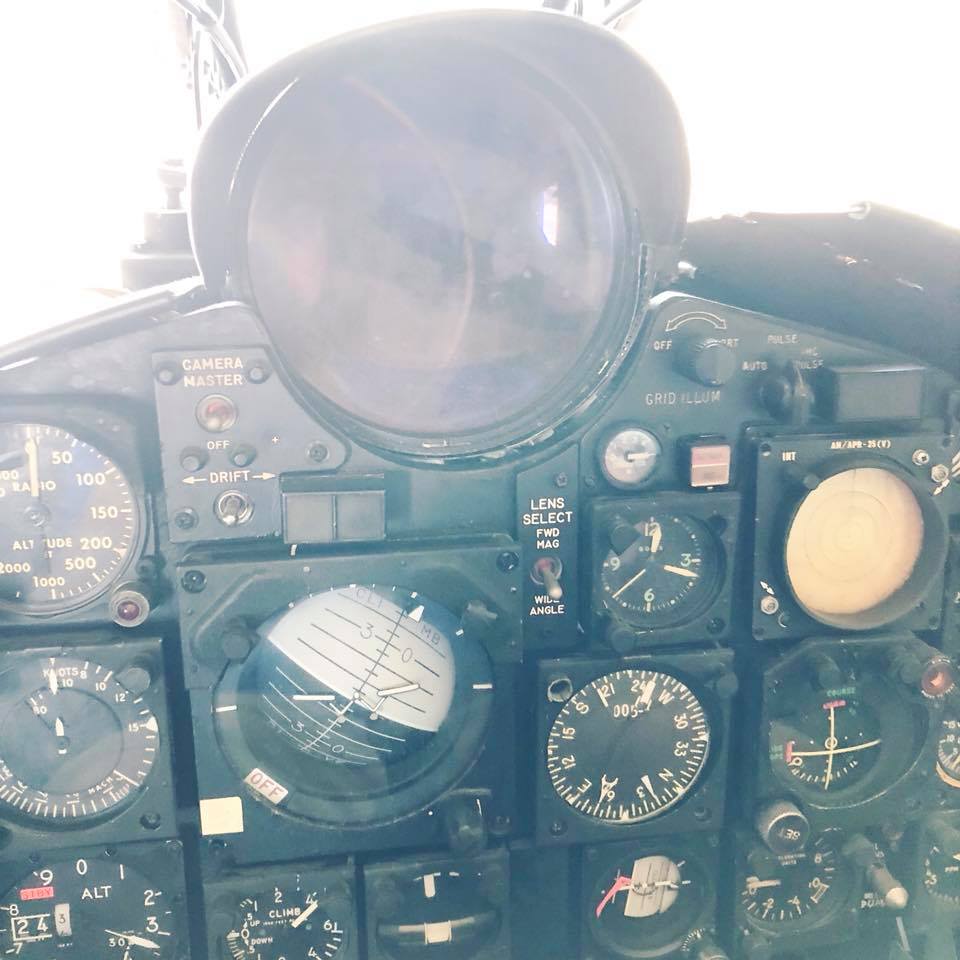
    • Look into the cockpit of a photo Crusader

"The RF8A was a marvelous machine and a good friend for many years."
J.J. Olsen, Cdr USN (Ret)

    Finale of the Crusaders
    Pilots Remember the Crusader, Last Rides and Other Memories

  • Pilot's Memories of the RF8 & F8 Crusader: Finale of the Crusaders

    • Photos of the last RF-8s at Davis Monthan (AMARC) "Bone Yard"

    • Pilots remember the two seat Crusader, "The 2Sader".

"Two of the best fighter's in my log book had wings that moved, one up and down, one forward and aft. -- Jerry Merritt

Click photo to enlarge

Click photo to enlarge. Art by: Stéphan GARNAUD

Drawing of a Crusader RF-8A Det.65 on USS Enterprise 02/08/1964 - 10/03/1964 Med, World Cruise "Operation Sea Orbit".

To see more of Stephan's aircraft art, click on:US Navy and Marines Planes and Helicopter Art


    The History and Restoration of RF8 Bureau Number 145645

  • Project Crusader: The Story of RF-8 BuNo 145645:-Marines, VFP-62, VFP-63, Davis Monthan (Bone Yard) & exhibit at Battleship Park, Mobile AL

"It means a lot to this old sailor to see the Chance Vaught Reconnaissance Crusader receive such recognition. She was indeed a truly remarkable aircraft." --James A. Bremner PHC USN(ret) VFP-63


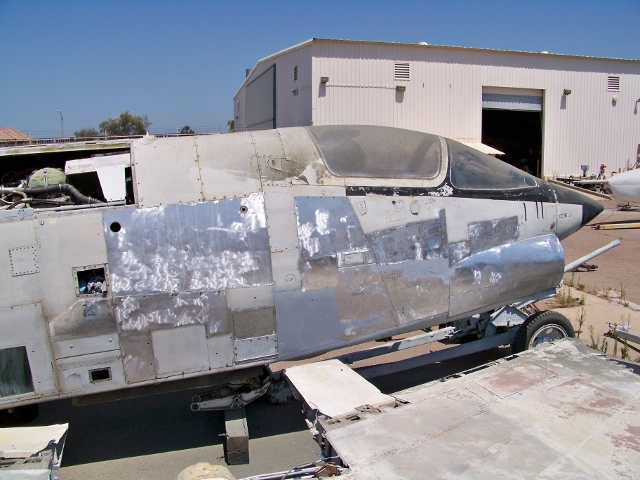
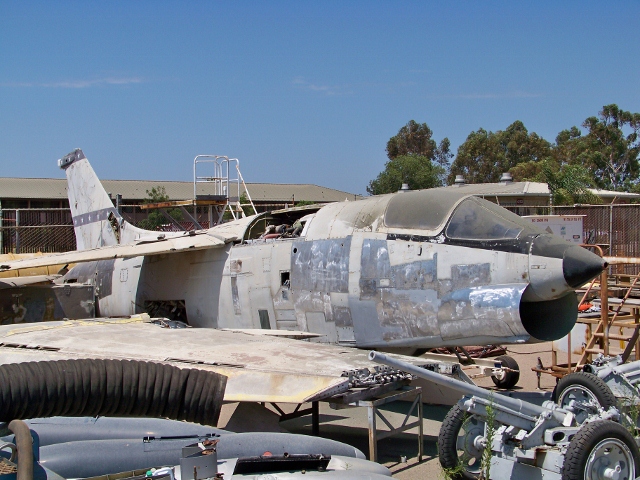
    Other Photo Crusaders Being Restored
    Or in Museums

    Click on photo to enlarge
    Click on photo to enlarge


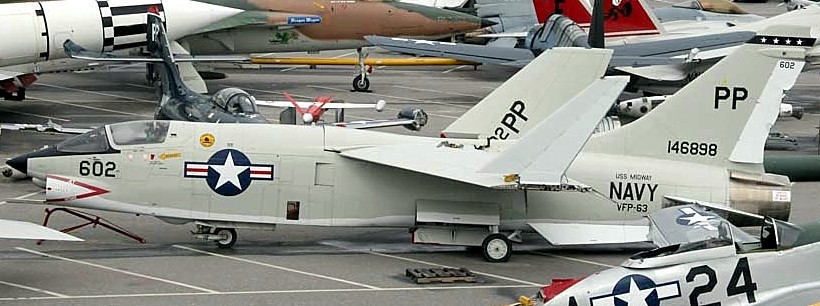
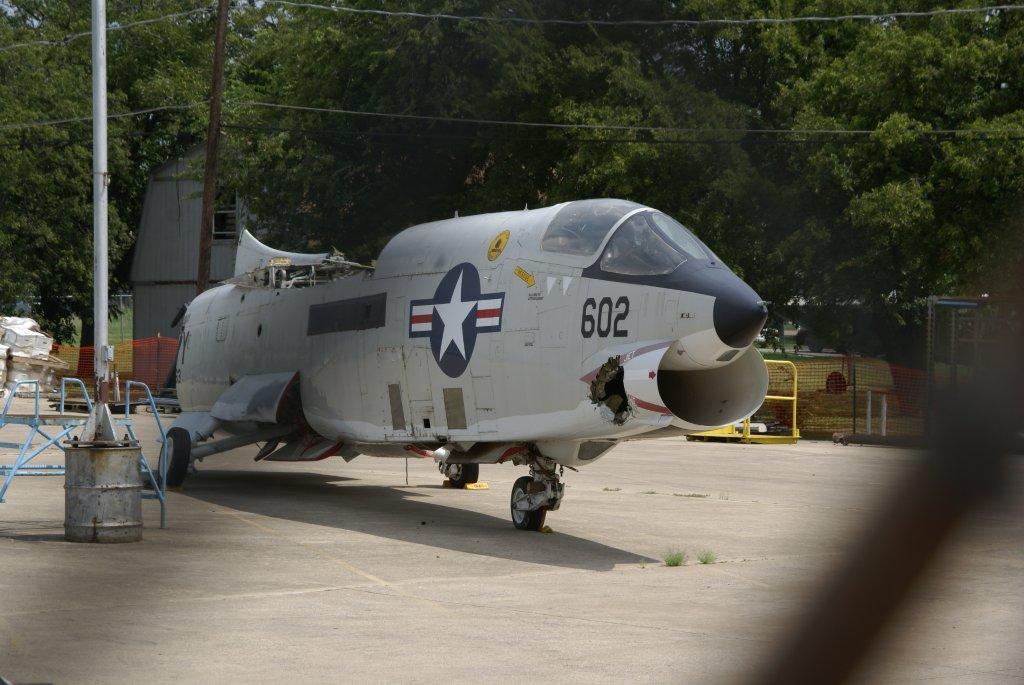
    RF-8 (BuNo 146898) that had been damaged by hurricane Katrina in Mobile, Alabama was returned to the National Museum of Naval Aviation (NMNA) in Pensacola, Florida and was being considered for use as a ground target at Egland AFB. This particular airplane was part of the initial contingent of aircraft to fly over Laos in 1964 with VFP-63. In addition to multiple carrier cruises with the Navy, it also served with Marine squadron VMJ-4 at Navy Dallas from 1969-1971.

    [The aircraft went through LTV and received the P-420 engine and some other avionics updates and then continued in service with VFP-306 until September of 1984 when I delivered the plane to the Naval Air Museum in Pensacola. With the P-420 engine the plane would go supersonic in basic engine thrust in straight and level flight.

    This plane will arrive in Fort Worth TX on the 29 Dec. '08. It has been loaned to the the Veterans Memorial Air Park at Meacham International Airport. The group will restore 146898 and repair the damage from the storm that hit battleship park in Mobil AL. --Gary Riese]

    RF-8 #146898 was built in 1960. This Photo Crusader served with Navy squadrons VCP-63, VFP-63, VFP-306 and Marine squadron VMJ-4. It made cruises aboard the USS Lexington, Hancock, Ranger and possibly others.

    The goal is to bring this RF-8 Crusader back to Fort Worth as part of the Veteran’s Memorial Air Park “Fort Worth Four” recovery program. Website: http://www.ov-10bronco.net/

    More Information to follow:
    • Update: 1/9/09: The restoration planning is leaning toward VFP-63 on one side. VMCJ-4 on the other.


    • Update: 2/28/09: I am looking for any photos, spotting reports, that you might have of this aircraft. Especially of interest would be her time with VMJ-4 with 7K, MD, MJ tailcodes, but all others welcome.

      I am looking for modex/side number information for possible paint schemes after restoration. In addition, photos would be welcome that we could print and display.

      I made a similar request about two years ago, well before the jet arrived and got a few VFP-306 photos for which I am thankful for. Now hoping that someone will have information from the VMJ-4 and VFP-63 years.

      [Webmaster's Note: contact Bill Spidel: phantomologist@gmail.com


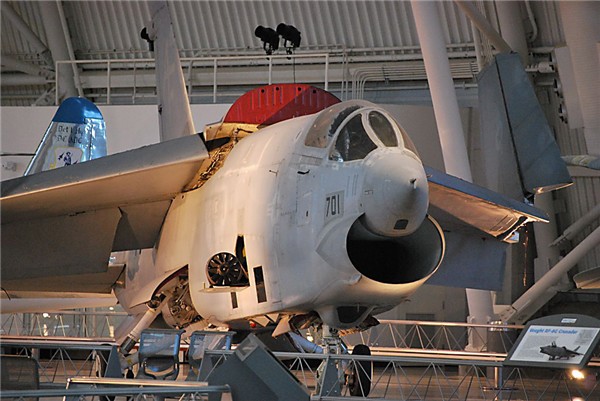
  • Stephen F. Udvar-Hazy Center (Smithsonian)/ (near Dulles airport) Chantilly, VA. A VFP-206 RF-8G Bu No 146860 is on display. Click to read a good account describing the: RF-4 photo-Phantom and the Crusader


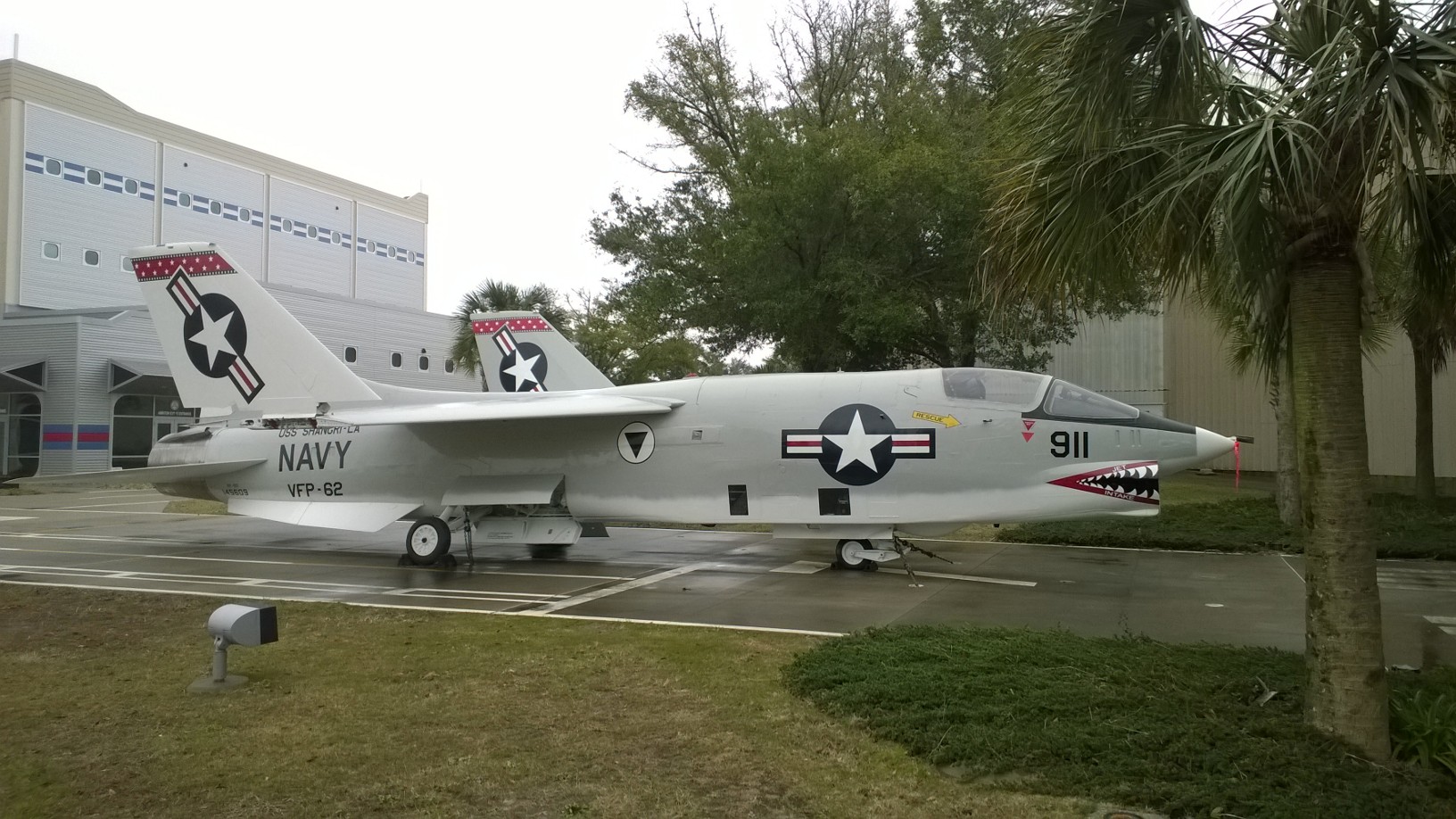
  • RF-8G Bu No 145609 is poised for restoration at the National Museum of Naval Aviation, Pensacola FL. This plane flew with VFP-62 (circa 1966 as nose number 906), VMCJ-4 (circa 1972 as nose number 41), and VFP-63 (circa 1976 nose number 610). It was retired to Davis Monthan on 4/27/82. Photo at NMNA: RF8 145609 -Courtesy of Owen Miller, Battleship Park


  • RF-8G BuNo 145607 saw service with VFP-62 circa 1960 and ended up with VFP-206 until 1987. It has been moved from Andrews AFB and will be restored at [EXTERNAL LINK]: -Castle Air Museum (CAM), Atwater, CA.

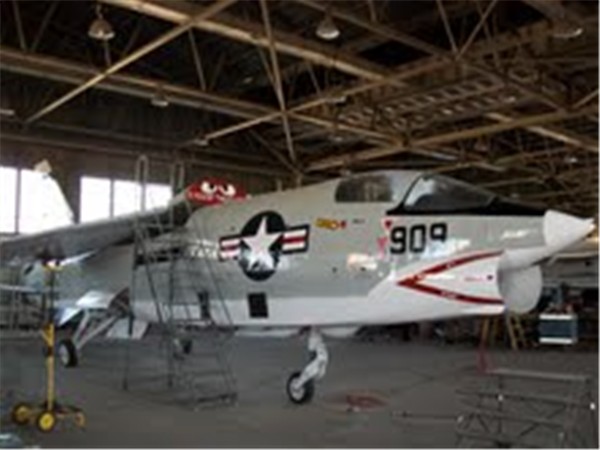
    • Click to see:_145607 in the VFP-62 hanger-circa 1958-60

    • "The RF-8 could out accelerate the F-106 up to Mach 1.2 or so when it hit the brick wall."

    • "RF-8G 145607 was in VFP-206 until the very end in early 1987. I believe that was the RF-8 bailed to Rockwell for B-1B chase work. I checked out Rockwell Chief Pilot Ken Dyson in that airplane (if it was the one sent to Rockwell) in the summer of '87. I flew in the back seat of a Rockwell F-106B, and the RF-8 could out accelerate the F-106 up to Mach 1.2 or so when it hit the brick wall. Hopefully, they will restore it in VFP-206 livery." --Moon Rivers

    • [Update April 8] Rockwell International in Palmdale, California obtained two RF-8Gs from VFP-206 and 306 after these reserve units decommissioned. These were 144617 and 145607. They were used in support of Rockwell's Advanced Technology Wing program. However, only 144617 actually made any flights. In May of 1987, the ATW program ran out of funds, and no further tests were carried out. (145607- Rockwell International N114NR).--Ken Simmons (CAM Restoration Crew)

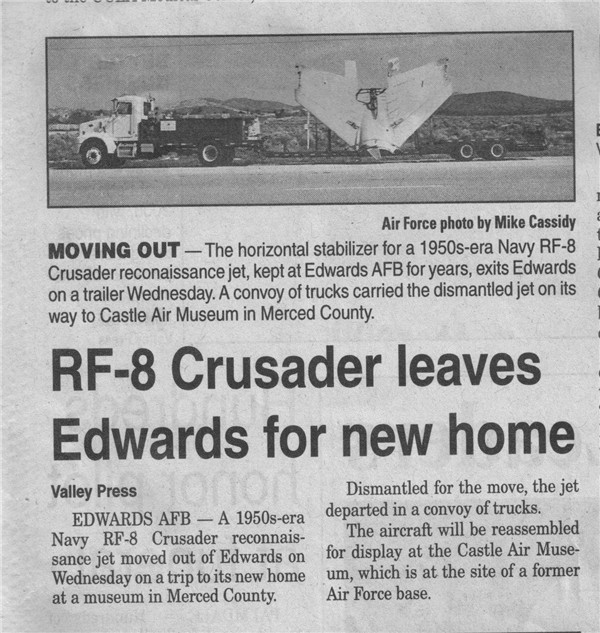
    • [March 31]:"RF8G 145607 was moved by road from Edwards AFB to the restoration hangar at Castle Air Museum (CAM), Atwater, CA. A small volunteer crew from the museum dismantled it. The airplane is complete except for the cameras and has very little visible corrosion. We are looking for three new tires as they are completely shot. We are gathering information as to the correct paint scheme and markings. The restoration will take some time as we have three aircraft in work now and a small volunteer crew."--Charles Sill, CAM Restoration Dept.
    • [Update April 1] Click to see: Moving RF-8G to CAM -Contributed by: J.J. McKenna

    • [Update April 4] Click to see photo on: -Modern Warbirds Registry

    • [Update April 8]: Capt. John Hudson USMC VMCJ-2 flew a photo mission over Cuba on 13 November 1962. This documents it was a VFP-62 RF-8A during the Cuban Missile Crisis.

    • [Update April 8] EXTERNAL LINK: 145607 (VFP-206) on the USS Dwight D. Eisenhower (CVN 69) 15 Sept. 1985 -- Ken Simmons (Crew Chief C-47 CAM)

    • [Update April 13]New photos of: VFP-62 RF8 145607 refueling _Picture #2 VFP-206 RF8 145607 Contributed by: Wayne "Flash" Whitten LCOL USMC Ret.

    • [Update Sept 28]An update on the restoring of ther RF8 at the Merced Air Museum. Thanks to Henry Livingston - a reserve Photo pilot in DC - Charlie was able to get in touch with a gent named Claude - something or other - in France. Claude had a collection of spare parts from the French F8's. Charlie bought a complete set of tires - and wheels - and is having them shipped to Merced. The cost was $1,200 which included shipping. The money came out of his back pocket. For an Air force guy, it says a lot that he was willing to pay to restore a Navy aircraft. Henry and I have each sent him $200 to help defray the cost. If you know of anyone who is willing to cvontribute any reimbursement - in any amount - let me know and I will give him Charlie's address. Apparently the RF8 is third in line for the restoration effort. They are currently working on an F15.---Scott Ruby

    • Update 4/24/10: I have received notification that the RF8 at the old Castle AFB museum will be painted as a VFP-63 bird (see below). The project is fully funded, and those that have provided a donation are thankfully appreciated. It is anticipated that the RF8 will be painted in the next 4-6 weeks, and be put on display shortly there after. There wil be some sort of ceremony - as yet to be determined - with a dinner to follow. Those who wish to attend will be notified.

      We are working on a plaque commemorating those that have contributed to the restoration. Also, as suggested by Rog Crim, we are working on a memorial to those 12 VFP-63 pilots that were lost in Viet Nam.--Scott Ruby VFP-63 pilot. For more information, contact Webmaster.

    • Update 7/11/10: Click to see :the painting of Bu No 145607 in progress Photo: Scott Ruby


  • Update: 7/11/10--RF-8G BuNo 144617: The Marine Photo Crusader is on display at the MCAS Miramar museum. It is in rough condition according to LCDR Tad Riley and in need of some TLC. The tail markings indicate it was last attached to VMCJ-3. It was also assigned to NADC and VFP-206.


  • Update 4/24/10: RF-8G Bu.No. 146860 restored at National Aerospace & Space Museum at Dulles IAP This RF-8G was the last operational Navy Crusader . Delivered as an F8U-1P, Served with the US Marine Corps in Asia and flew over 400 combat sorties.

    Squadrons flown by: VMCJ-3, VC-7, and VFP-206.

    Click to see picture: RF-8G 146860 at Dulles

    Contributed by J.J. McKenna


  • [Update May 18]EXTERNAL LINK to the Boeing Museum of Flight Restoration Facility in Everett, WA, where: the very first Crusader (fighter) is undergoing restoration - courtesy Dave Johnson


  • Question: "Have Crusaders been restored to flyable condition?"

      YES!!

      Sit in the Cockpit of the Last U.S. Crusaders
      Told by Those Who Flew It

      "...the mouths of the young F-14 jocks hanging open,
      with whispers of 'What the hell was THAT?'
      as the burner lit...they were all in awe."
      Hoss Pearson.

    • As told by those who flew: Thunderbird Aviation's Restored F8's-Courtesy of "F8 Community blog"

"The modern Navy is a much safer way to make a living than the one 40 years ago, I think the public needs to know about the people and aircraft that led to our modern force. -- Kent Kaiser, son of CDR Dean E. Kaiser"


Of all the planes [F8, F4, F14] I flew, the F-8 was my favorite - Cress Bernard


"The F4 was an enormously capable aircraft but, in my experience, there was never anything like the F8 for the pure joy of flying a beautiful airplane." --Bruce Martin

    Flying Fast in the Crusader

    Captain Lynn Helms USMC was the first Naval Aviator to exceed 1000 MPH (June 1955). John Konrad received Crusader 1000 MPH Certificate Number 1. Lynn Helms received Crusader 1000 MPH Number 2, dated 24 June 1955, signed by Paul Thayer VP of Chance Vought. Duke Windsor received 1000 MPH Certificate Number 3.

  • EXTERNAL FILE: (Adobe .pdf Format) The early supersonic flights:Mach 1+ "The Dash" Great description of the first 1000 mph flights in the Crusader. A copyrighted article from Flight Journal; Contributed by Walt Quist & Dave Johnson


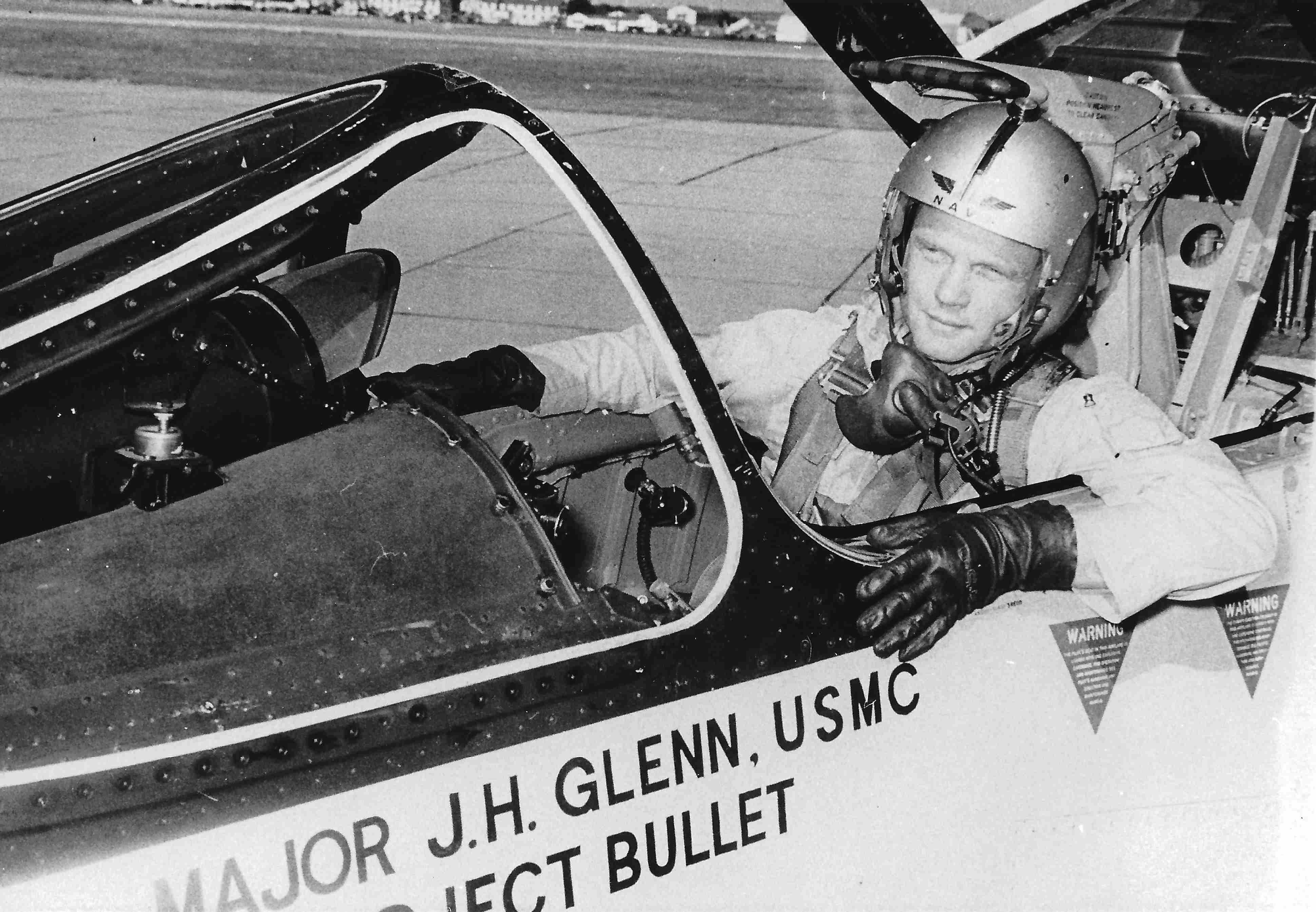
  • "PROJECT BULLET"
    Record Setting Flight in a F8U-1P by Maj. John Glenn

  • In 1957, before the F8U-1P became fleet operational I was part of the team at the Naval Air Test Center, Patuxent River, Maryland which conducted the Board of Inspection and Survey (BIS) trials on the F8U-1P. It was this aircraft which was flown by Maj. John Glenn in "Project Bullet." Maj. Glenn was, at that time assigned at NATC as a test pilot.

    After that record setting flight was completed, the aircraft was returned to the test team to continue the BIS Trials. Here's a link to a site that will give you more information about the project: [EXTERNAL LINK]Project Bullet

    Some additional info about the BIS Trials of the F8U-1P. Prior to starting the tests the team flew down to Dallas and spent several days at the Chance Vought plant observing many of the manufacturing processes involved in building the Crusader and getting a briefing on the operation of the various aircraft systems. --Provided by Harold (Hap) Murphy PHCS USN(RET)

    Webmaster's Note: The F8U-1P Maj. Glenn flew Project Bullet with was lost in an operational accident on 12/13/72 in the South China Sea, from VFP-63 Det. 34 on the USS Oriskany. LT. T. B. Scott was recovered.


  • "THE SPEED RUN"
    Getting Max Speed out of the "Gator"
    by Ron (Astro) Knott

  • As an IP at VF-174 I briefed the speed run many times. As I recall the following procedures were used to get max speed out of the “Gator.” This was over 40 years ago so I will tell it like I remember. Corrections are appreciated.

    Before the flight we would contact metro logy to find out the altitude of isothermal layer on that day. Isothermal process is a change in which the temperature of the system stays constant. It varies from day to day but is usually in the 40,000 range. An average reduction value of 3°F per 1000ft is commonly used up to the isothermal layer. For some reason, unknown to me, this was the best altitude to get the highest speed out of the “Gator.” And as I recall this altitude was usually between angels 37 to 42 [37000 - 42000 ft] on most days.

    The student and instructor would climb to angels 50, cruise droops in, slipping along at .96 M or better. Next procedure was to plug in the stereo [After Burner] and genteelly “0” g downhill to the isothermal layer altitude. Hopefully, you would accelerate above 1.35 Mach (the high drag area) on the high dive. We would level off at the isothermal layer and start a slow climb (1000 fpm) back up to the mid 40’s and leveling off accelerating slowly to max speed. Remember we had a 5 minute max time on the burner.

    If you had a clean and powerful bird you could easily reach 1.7 to 1.86 (max speed) on this run which was well above 1000 MPH. If you got less than 1.35M on the downhill run the top speed would be reduced significantly.

    We also briefed that at the end of the speed run for the student to come out of burner and apply a 4 g turn. As you will remember there was no buffet at all when pulling g’s supersonic in the F-8. However, when the bird went from supersonic to transonic to subsonic the shock wave traveled forward allowing the UHT to become much more effective. This 4 g turn instantly turned into a 6 or 7 g turn and the AC would normally depart rapidly to the opposite direction of the turn. (Remember the cruise droops were in giving less lift as well.) The student would leave helmet paint on both sides of the canopy after such a rough departure.

    Not only was this a max speed run it was also a great demonstration of the high speed departure action of the F-8. Several AC would accelerate beyond the 1.86 M but that was not allowed according to the hand book. Of course many went up to the 2.0 M number so I was told. “Those were the day my friend.”

    [Webmaster's note: This was excerpted from the F8 Community web site, where pilot chat frequently brings up these interesting stories]


  • And then there was...


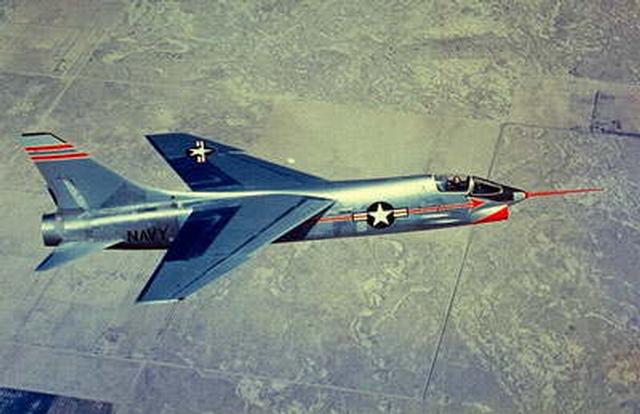
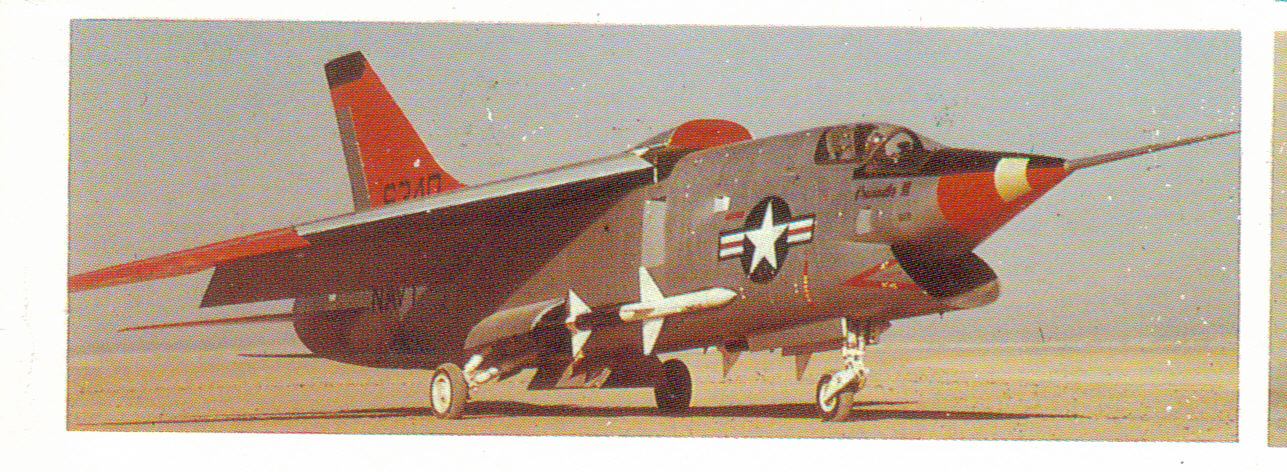
    The Super-Sader (F8U-3)


    Click photo to enlarge
    Mach 3 prototype at Edwards (Click picture to enlarge) - Contributed by John Sees)


    "Quite a surprise when at Mach 2+ a big red light came on the panel that said "SLOW DOWN" --I did. :-) Another item about the F8U3: Above Mach 2 the thrust required and the thrust available diverged, and therefore the faster you went the faster you went.!!!! - Hal Vincent


Email the -VFP-62 Webmaster- -to send a comment or contribution to this page.